

A well-designed kitchen pantry can transform the way you use your kitchen. Whether you enjoy cooking elaborate meals, need more storage for your busy family, or simply want a cleaner, more organized space, the right design can improve convenience and overall kitchen flow.
From walk-in pantries to compact cabinet solutions, creating the perfect pantry starts with understanding your storage needs and designing a space that works for your lifestyle.
Why Pantry Design is Important
Most people think of a pantry as just a place to store canned food and snacks. But this space plays a key role in keeping your kitchen clean and organized. A thoughtfully designed pantry can reduce countertop clutter, improve kitchen organization, make meal preparation easier, help minimize food waste, increase storage capacity, and even add value and functionality to your home.
The best designs combine aesthetics with practical storage solutions to maximize every inch of space.
Start with Your Storage Needs
Before selecting shelving or picking a layout, think about how you use your kitchen every day. Consider how much food storage you need, your cooking habits and entertainment needs, and bulk shopping storage requirements, as well as the small appliances you want to store, and family member accessibility.
Take inventory of what you currently have in your kitchen and note problem areas. This helps you create a pantry system tailored to your specific needs instead of suffering with a one-size-fits-all solution.
Popular Pantry Styles
Walk-in Pantry
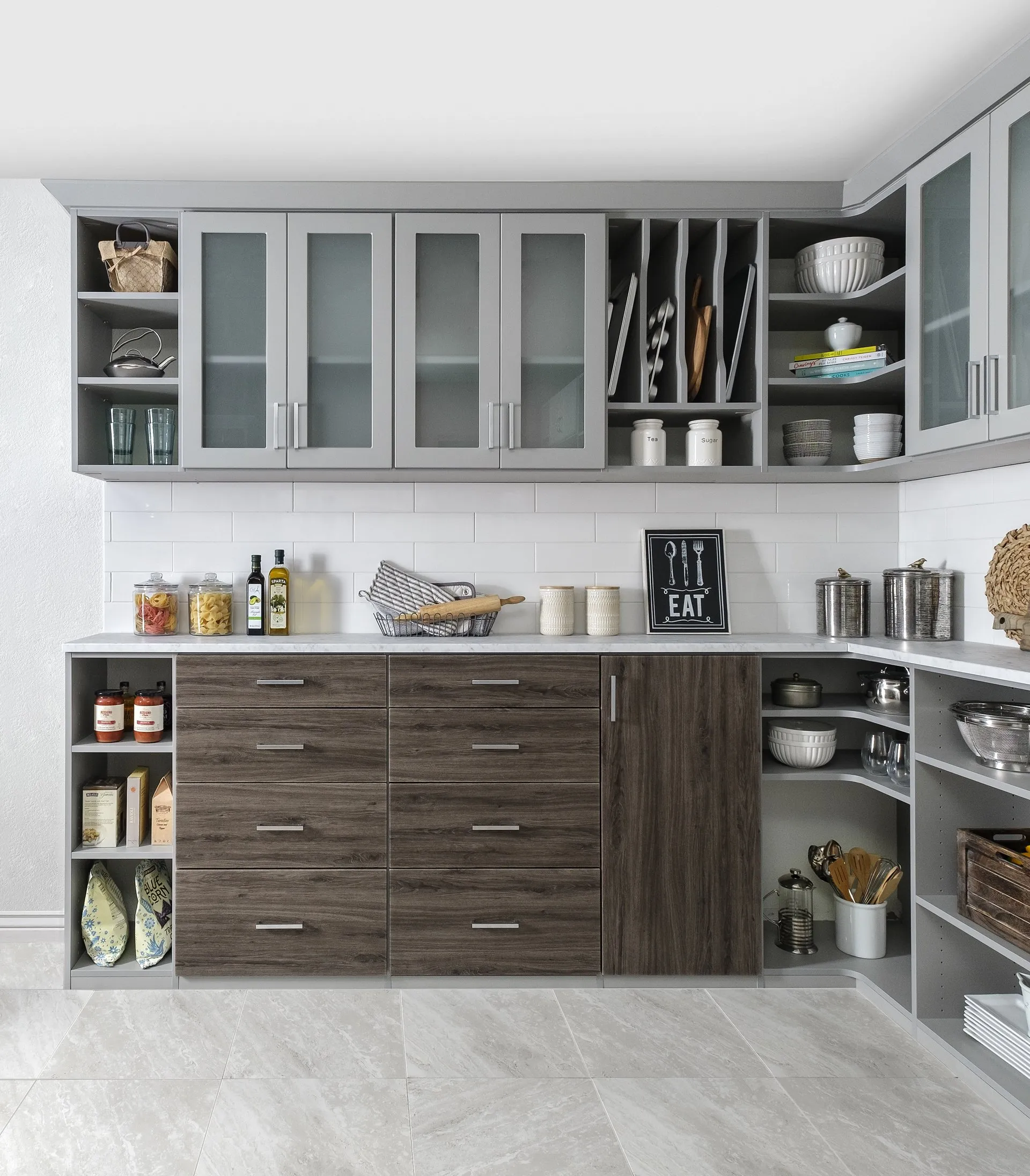
A walk-in pantry gives you maximum storage and flexibility. These larger spaces can include floor-to-ceiling shelving, counter space for appliances, pull-out drawers, built-in baskets, and dedicated zones for dry goods, snacks, and cookware.
This design works best for large households, homeowners who cook and entertain frequently, or those who buy in bulk or want to hide countertop appliances.
Butler’s Pantry
A butler’s pantry serves as both a storage area and a prep space between the kitchen and dining room. It often includes additional cabinetry, beverage stations, wine storage, secondary sinks, and serving areas.
A butler’s pantry works best in homes designed for hosting guests.
Cabinet Pantry
For smaller kitchens or apartments, cabinet pantries can provide needed storage without requiring extra square footage. Add adjustable shelving, pull-out organizers, hidden space racks, deep drawers, and door-mounted storage.
Key Features of an Efficient Pantry
Adjustable Shelving — Flexible shelving allows you to change your pantry as your needs evolve. Use taller shelves for cereal boxes or appliances and shorter shelves to keep boxed and canned goods organized and visible.
Pull-Out Drawers and Baskets — Deep shelves often lead to lost items hidden in the back. Use pull-out drawers and baskets to improve visibility and accessibility, as well as keep items neatly contained.
Dedicated Zones — Organize your pantry by category to create a more functional space. Create zones for baking supplies, snacks, breakfast items, herbs and spices, canned goods, and small appliances.
Proper Lighting — Good lighting is essential in any pantry. Add LED lighting under shelves or overhead fixtures to improve visibility and create a more inviting space.
Appliance Storage — Consider modern designs that include storage for appliances like mixers, air fryers, coffee makers, toasters, and even slow cookers. This helps you keep your kitchen looking streamlined and clean.
Maximizing Small Pantry Spaces
Even a small pantry can feel spacious with smart design choices. Consider adding vertical storage solutions, door-mounted organizers, lazy susans, slim pull-out shelving, or stackable bins.
Custom Pantry Solutions
Everyone uses their kitchen differently. Custom pantry solutions allow homeowners to create a space that enhances their routine, matches their aesthetic, and supports their cooking habits.
A custom pantry may include hidden storage compartments, wine storage, built-in charging areas, pet feeding stations, or integrated lighting.
Pantry Organization Tips
Once your pantry is designed, proper organization can help you maintain long-term functionality.
Use Clear Containers — Transparent containers make it easier to see contents, as well as create a cleaner, more cohesive appearance.

Label Everything — Labels help you and your family keep things organized and quickly find ingredients.
Rotate Inventory — Store newer items behind older products to reduce food waste and keep pantry items fresh.
Keep Frequently Used Items Accessible — Place everyday items at eye level and less frequently used products on higher or lower shelves.
A Better Pantry Equals a Better Kitchen
The perfect pantry supports your daily routine, as well as keeps your kitchen organized and functional. Whether you choose a spacious walk-in pantry or a compact cabinet solution, thoughtfully designed storage can make cooking, shopping, and entertaining easier and more enjoyable.