
A well-organized closet can streamline your daily routine and help your room feel less cluttered. But even with the best intentions, many homeowners unknowingly make storage mistakes that waste space and damage belongings. If your closet feels chaotic or overwhelming, one of these common errors may be to blame.
1. Overstuffing Your Closet
If you have a small closet or are unable to keep up with your growing wardrobe, you may be tempted to keep cramming clothes, shoes, and accessories into every inch of space. However, overcrowding mistakes can lead to wrinkled clothes, broken hangers, and damaged fabrics.
How to Fix It
Declutter Regularly — Consider adopting a “one in, one out” rule, donating or getting rid of one article of clothing every time you buy a new piece. Or declutter seasonally and donate items that are worn out, don’t fit right, or that you no longer wear. Leave breathing room between hangers for a polished look.
Rotate Seasonal Items — Free up space by storing off-season clothes in bins or vacuum-sealed bags elsewhere, such as under a bed or on a high shelf.
Store Items “File-Folded” in Drawers — Instead of stacking clothes, fold and place them vertically in rows. This saves space and makes every item visible. To further utilize vertical space, add double hanging rods, shelves, or hooks.
2. Using Mismatched or Flimsy Hangers
Wire or thin plastic hangers might seem like the most convenient or inexpensive option, but their lack of support can warp your clothes and make your closet look disorganized.
How to Fix It
Use Sturdy Hangers for Heavy Items — Heavy coats and suits need strong, structured hangers, such as wood, to support their weight and maintain their shape.
Opt for Slim, Non-Slip Hangers — Felt or flocked hangers prevent delicate items like silk blouses and knitwear from slipping off and landing in a pile on your closet floor. Additionally, they are slimmer than plastic hangers, giving you much-needed space.
Never Hang Heavy Knits or Sweaters — Storing heavy garments on hangers can stretch them out and cause shoulder dimples. Instead, fold these items and place them on a shelf.
3. Not Protecting Seasonal Items
Storing off-season clothing without proper protection can lead to dust, mildew, or even moth damage. Tossing sweaters on a shelf or shoes in a pile over the summer can shorten their lifespan.
How to Fix It
Ensure Proper Ventilation — Avoid storing clothes in sealed plastic bins long-term, as this can trap moisture and lead to mold and mildew. Consider using breathable garmet bags.
Use Natural Repellents — Cedar blocks or lavender sachets are natural alternatives to mothballs that will protect items from pests without harmful chemicals.
Store in a Cool, Dry Place — Attics and basements with fluctuating temperature and humidity may not be ideal places to store clothing long-term.
4. Forgetting About Shoes
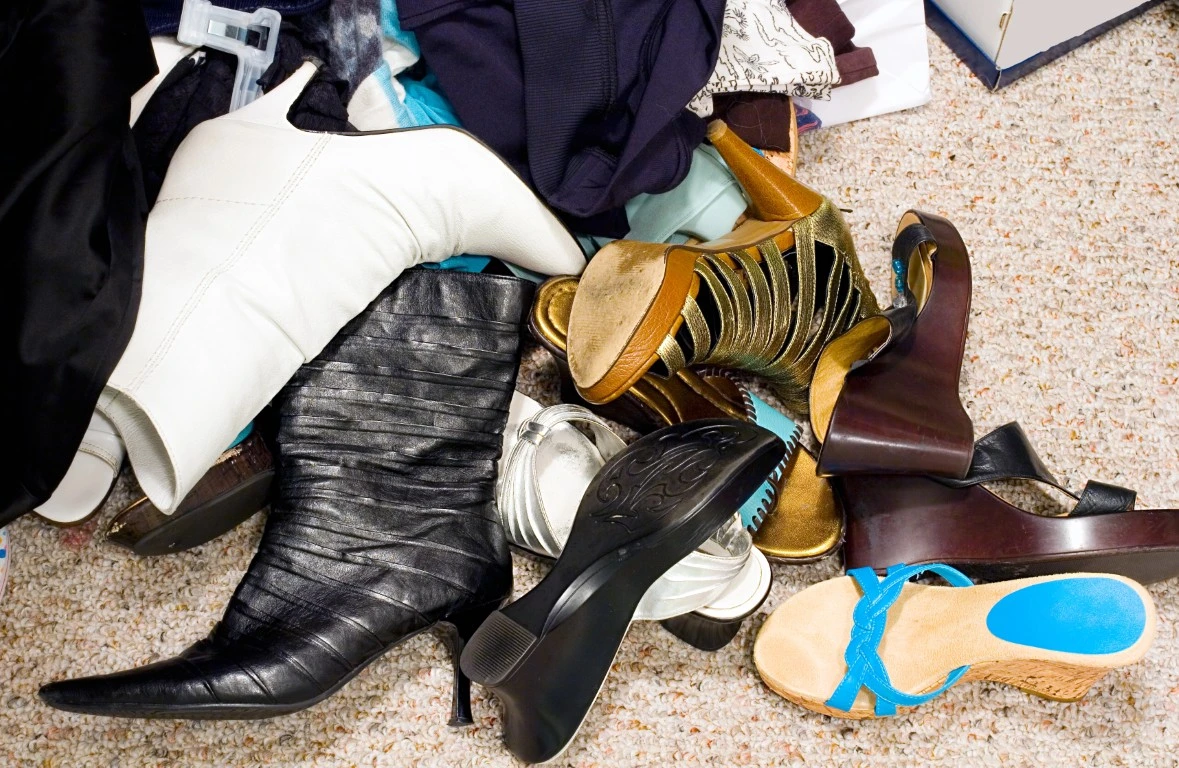
Shoes typically end up in a messy heap on the closet floor, which can waste space, make your closet feel chaotic, and cause scuffs and creases. It can also make it hard for you to find a pair.
How to Fix It
Use Shoe Racks, Shelves, or Cubbies — These can be placed under hanging clothes to utilize vertical space.
Use Clear, Stackable Shoe Boxes — These boxes protect shoes from dust and scuffs while keeping them visible. Consider ventilated boxes for leather to allow for proper air circulation.
Store Boots Correctly — To prevent creases, store boots upright with boot shapers or rolled-up acid-free paper. If you have the space, you could also hang them from boot hooks or special hangers.
5. Skipping Customization
Every closet is different, and one-size-fits-all solutions rarely maximize storage. Ignoring your specific needs, like handbag storage, tie racks, or drawers, can lead to wasted space and frustration.
Declutter First — Before buying or investing in any storage solutions, clear out your closet and take inventory. Measure your space and assess your needs based on the items you’re keeping. This helps you save money and avoid mistakes.
Custom Closet System — Consider investing in a custom closet system designed for your wardrobe and lifestyle.
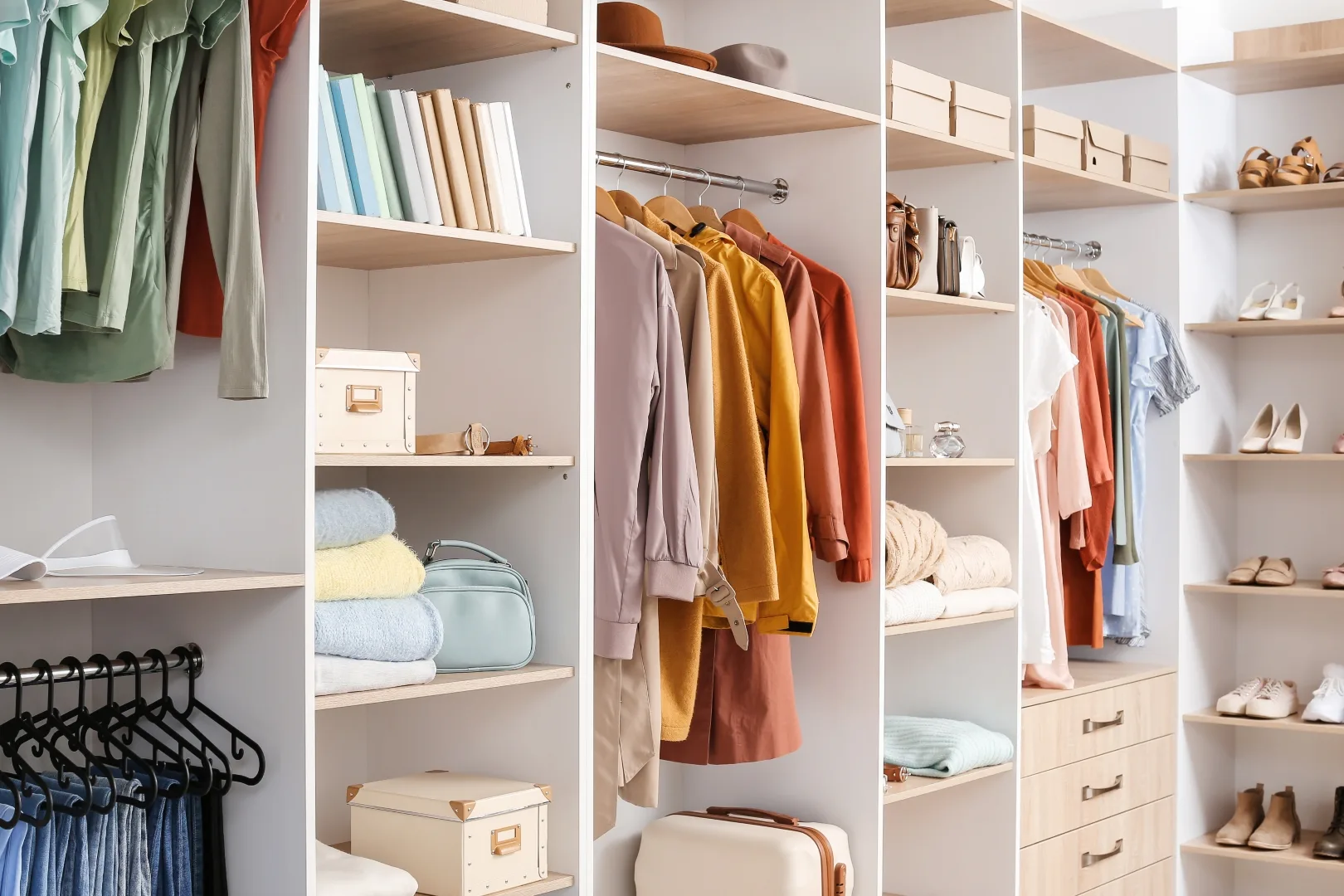
Create Zones — Divide your closet into dedicated areas for different types of items to make everything easier to find.
An Organized Closet Equals an Organized Mind
Your closet should work for you, not against you. By avoiding common storage mistakes, you can protect your belongings, maximize every inch of space, and enjoy a streamlined, stress-free closet. If your current setup feels overwhelming, investing in a customized storage solution could be the game-changer your home needs.