
When it comes to closet organization, many homeowners struggle with shoe storage. Shoes come in many different sizes, shapes, heights, and styles, making them difficult to stack or store efficiently. A thoughtfully designed shoe closet can transform a cluttered collection into an organized, attractive display.
Whether you have a few favorite pairs or enough shoes to fill several shelves, custom storage solutions can help you make the most of every inch of your closet.
Start by Taking Inventory
Before designing your shoe storage, take a close look at your collection. Separate shoes into categories, such as everyday shoes, athletic shoes, boots, dress shoes, sandals, seasonal footwear, and speciality shoes.
Take note of which types of shoes you own the most of. Someone who has a large boot collection will need a different storage configuration than someone with dozens of sneakers or heels.
If you have any shoes you no longer wear, getting rid of or donating them can free up valuable space you’ll need for your new closet.
Choose the Right Shoe Shelving
Adjustable shelving is one of the best options for a shoe closet. Homeowners can move shelves to different positions to accommodate everything from flats and sneakers to tall boots and heels.
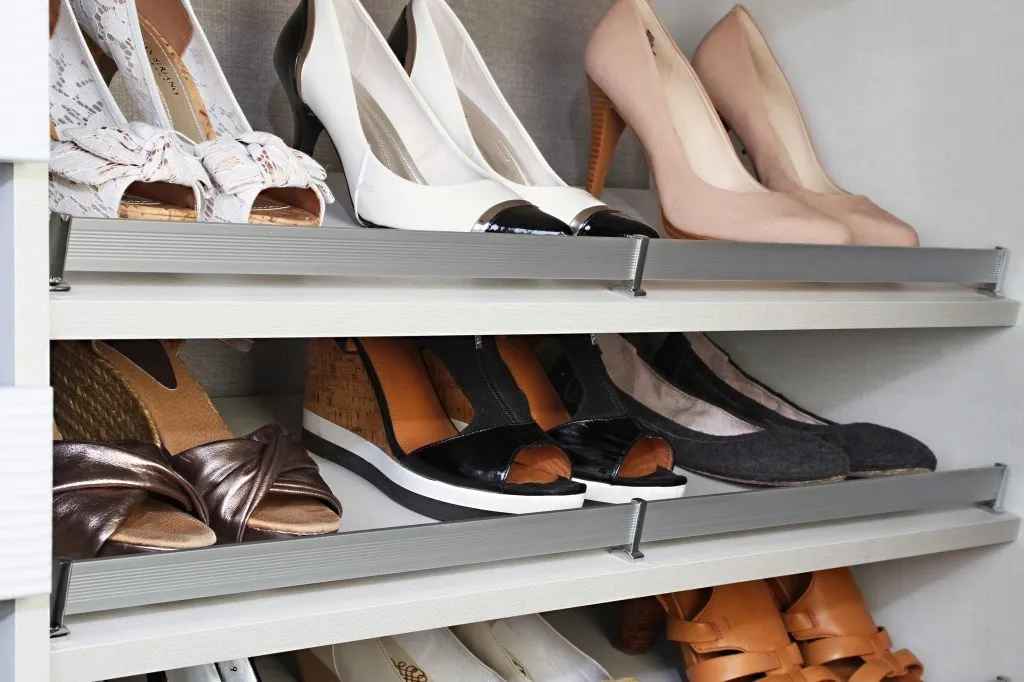
Adding slanted shoe shelves can make it easier to see each pair at a glance, and straight shelves can create a clean, streamlined appearance. Incorporating pull-out shelves helps you easily access shoes stored toward the back.
By investing in a custom shoe closet, you can integrate different shelf heights and avoid having to force every pair of shoes into the same-size space.
Give Boots Special Attention
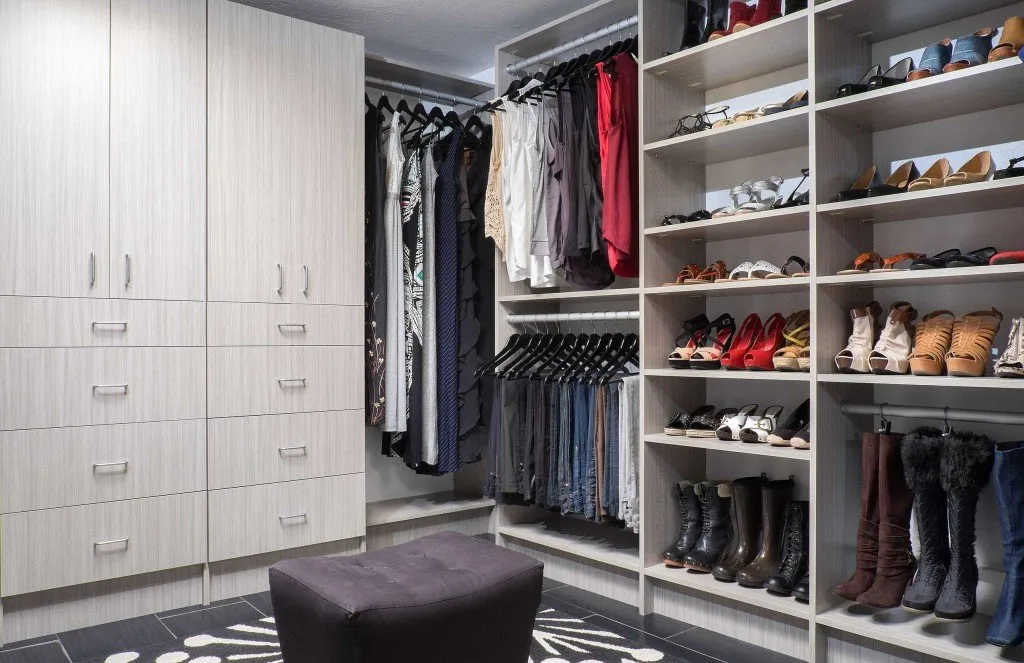
Boots often pose the biggest storage challenge because of their height. Standard shoe shelves may not provide enough clearance, forcing you to lay boots on their sides or store them somewhere else.
Consider incorporating taller compartments specifically for ankle boots, knee-high boots, tall riding boots, fashion boots, or seasonal winter boots. Dedicated boot storage keeps your boots upright and prevents them from getting crushed, creased, or misshapen.
Make Shoes Easy to See
A shoe closet is only useful if you can quickly find what you need. When you can see your shoes, you can get dressed more easily and avoid losing pairs in a crowded closet.
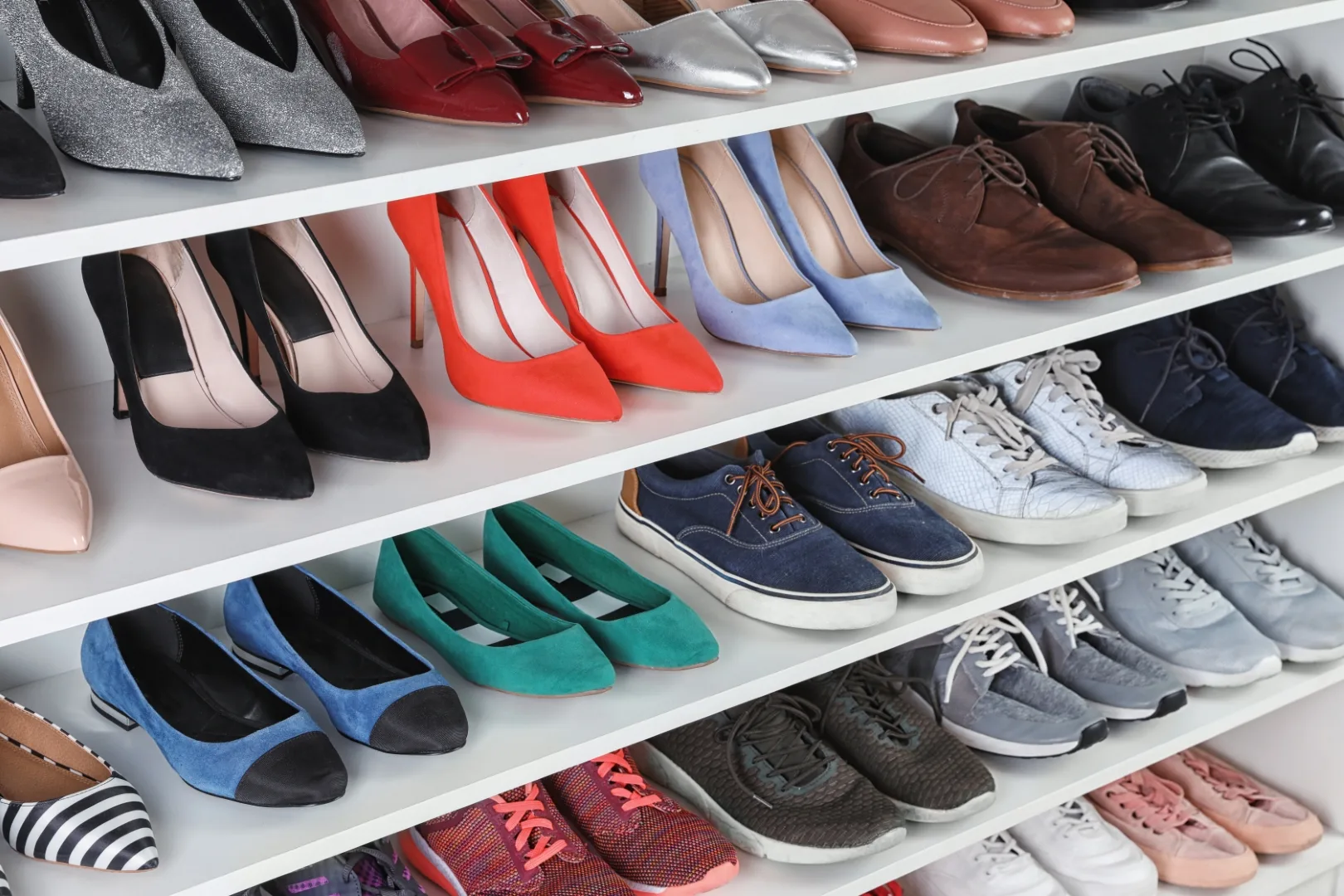
Clear organization, whether by type, color, season, or frequency of use, can make a significant difference. Additionally, placing everyday footwear at eye level or near the entrance and seasonal shoes higher up or farther back can make your closet more functional.
For an especially polished look, incorporating matching shoe shelves and consistent spacing can create the appearance of a high-end retail display.
Consider Pull-Out and Specialty Storage
Not every shoe needs to sit on a traditional shelf. Depending on the size of your collection and available space, specialty storage can provide additional flexibility.
Pull-out racks make narrow spaces more functional, while drawers can accommodate smaller footwear accessories. Rotating or tiered shoe organizers may also help maximize otherwise difficult-to-use areas.
Custom closets allow you to design storage around the shoes you actually own, helping you avoid having to fit your collection into a generic system.
Use Vertical Space
One of the biggest benefits of a custom closet is the ability to take advantage of vertical space. Walls that would otherwise go unused can become valuable shoe storage.
You can place less frequently worn footwear on higher shelves and everyday shoes on lower shelves. If your closet has tall ceilings, vertical storage can dramatically increase capacity without expanding the closet’s footprint.
Add Lighting
Good lighting can further enhance an organized shoe closet. Interior lighting helps you see colors, styles, and individual pairs without having to search through dark corners.
Incorporate LED lighting into shelving or closet compartments to give your space a sophisticated look and provide practical illumination. Invest in motion-activated lighting to enhance your walk-in closet.
Design for Your Future Needs
When designing a custom shoe closet, think beyond your current collection. Your storage needs may change over time, so adjustable shelves and flexible compartments can make it easier to accommodate new purchases and reduce the chance of clutter.
Create a Shoe Closet That Works for You
The best shoe closet is the one designed around your collection, lifestyle, and available space. By incorporating adjustable shelving, dedicated boot storage, proper lighting, and speciality storage, as well as utilizing vertical space, you can create a visually appealing and functional shoe storage system that makes your closet easier to maintain and your daily routine a little simpler.